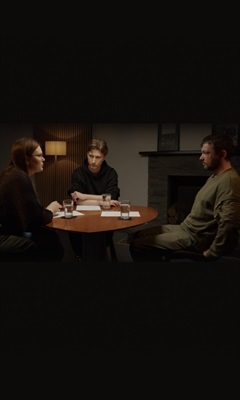


Svitlana Bahrei is a mother of five and a displaced resident from Mykolaivka in the Volnovakha district. After Russian troops occupied her village, she endured arrest, torture, and captivity. Yet she managed to escape to Ukrainian-controlled territory. For Volnovakha.City, she spoke about the price of freedom and the resilience of Ukrainian women.
The House That Became a Memory
24 Stepova Street in Mykolaivka. In 2019, Svitlana’s family bought a house there after moving from nearby Prokhorivka. They wanted better conditions for their children — Mykolaivka had a larger school and friendly neighbors. But something else struck her most.
“People spoke Ukrainian — almost everyone. Maybe surzhyk, but still Ukrainian. For me, that was such a pleasant surprise,” Svitlana recalls.
The family renovated the house and planted a fruit orchard. At the time, they had four children, and each of them planted a tree of their own, dreaming that one day they would show it to their own children.
Today, she says, nothing remains but ruins. Tanks and armored vehicles rolled through their yard. Enemy soldiers ransacked their family home.
“Sometimes I talk to locals… Chechens, Dagestanis, and militants of the so-called ‘DNR’ (the self-proclaimed Donetsk People’s Republic) lived there. I can’t even imagine what’s left of that house,” she says.
The Invasion Began on February 18, 2022
For residents of Mykolaivka, the full-scale invasion did not begin on February 24, but on February 18, 2022. Svitlana witnessed it herself while speaking on the phone with her husband, who was working in Vinnytsia at the time.
“Around three in the morning, they started shelling the outskirts of Mykolaivka, hitting the hangars where Ukrainian troops — our defenders — were stationed. I saw everything flying, whistling, exploding. People were screaming,” she says.
That morning, teachers from the local school called parents with a proposal to evacuate the children to the “Emerald City” children’s camp in Sviatohirsk. The parents agreed. On February 20, Svitlana saw her children for the last time before a long separation. They would reunite only two months later.
“I can’t even describe how worried I was. I didn’t know if they were alive, where they were, what was happening to them. There was no connection. For a mother, that’s the worst thing imaginable,” she says, holding back tears.
During that time, the children endured their own hardships. Her eight-year-old daughter’s hair began turning gray from the stress.
March 7: The Day That Could Have Been the Last
On March 7, 2022, when Mykolaivka was already occupied, several vehicles carrying Russian soldiers pulled into Svitlana’s yard. According to her, local residents had pointed out her house as one that had helped the Armed Forces of Ukraine. The family had indeed supported Ukrainian soldiers — providing water from their well, allowing them to wash their clothes, and their children had drawn pictures for the troops.
“My neighbor Nastia and I were standing in the yard. It was warm and sunny. Suddenly — four vehicles. They jumped out with automatic rifles and some kind of detectors, aiming at us and shouting. I had only seen something like that in movies. At first, I even smiled from shock. I said there was only a dog inside. One of them screamed at me, called me a ‘Ukrop bitch’ — using a slur for Ukrainians — and hit me. A small, thin woman. They turned the house upside down, tore up children’s photos, looking for something ‘Ukrainian.’ Then they took us to a farm and forced us to walk across a mined field. That’s when I thought: this is my last day.”
The abandoned farm near Novohnativka became a site of terror.
“They told us to walk to the hangars and look for anything ‘Ukrainian.’ Then they casually mentioned the field was mined. Nastia and I started walking. I told her, ‘Step exactly where I step. If I explode, you’ll only survive if you follow my path.’ We saw tripwires. We saw bloodied uniforms. My heart was pounding so loudly I could hear it in my ears. I knew that if we fell or were blown up, they would either finish us off or leave us to bleed out. But somehow, we were lucky. We made it there and back alive. It was a miracle.”
For surviving and refusing to reveal the positions of Ukrainian troops, the women were beaten and shot at near their feet.
Two Weeks in Dokuchaievsk — and Escape
Soon after, Svitlana was taken to Dokuchaievsk. She spent two weeks in captivity.
“I thought it was the end. They put me in a basement with over a hundred people. Every day they called me in for interrogations, beat me, and asked where our troops had been stationed. They knocked out my teeth and broke my nose. They took me to the morgue, showed me bodies, and threatened me… I heard prisoners of war screaming, though we never saw them. The worst for me wasn’t the beatings — I was terrified of something worse, of rape. They did that to other women. I thought it would be unbearable to live with that. I lived between fear and hope. Then one evening they opened the cell and called my name. I thought they would beat me again. But in the corridor stood my Nastia. They said, ‘You’re going home, but don’t leave your yard.’ I walked out of the gates and couldn’t believe I had survived. It felt like returning from the dead.”
She was released under what amounted to house arrest.
A few days later, Nastia brought news: a couple from the village offered to take them out through Mangush to Berdiansk. Svitlana grabbed a small backpack with documents. She had to leave behind her beloved German Shepherd, Herda.
On April 7 — the Feast of the Annunciation — they left. At the last checkpoint before Mangush, a Russian soldier said they would not pass without “filtration” and must return to Dokuchaievsk.
“I sat on a stone and started crying. I said I didn’t know where my children were, whether they were alive. I’m just a mother who wants to find them. He looked about twenty. He looked at me — and unexpectedly let us through.”
They passed filtration in Mangush and walked toward Berdiansk, barely making curfew thanks to strangers who gave them rides.
“When we reached Berdiansk, it felt like another dimension. The city seemed almost untouched — people in clean clothes sitting on benches, everything intact, quiet. And we stood there — beaten, exhausted, but alive.”
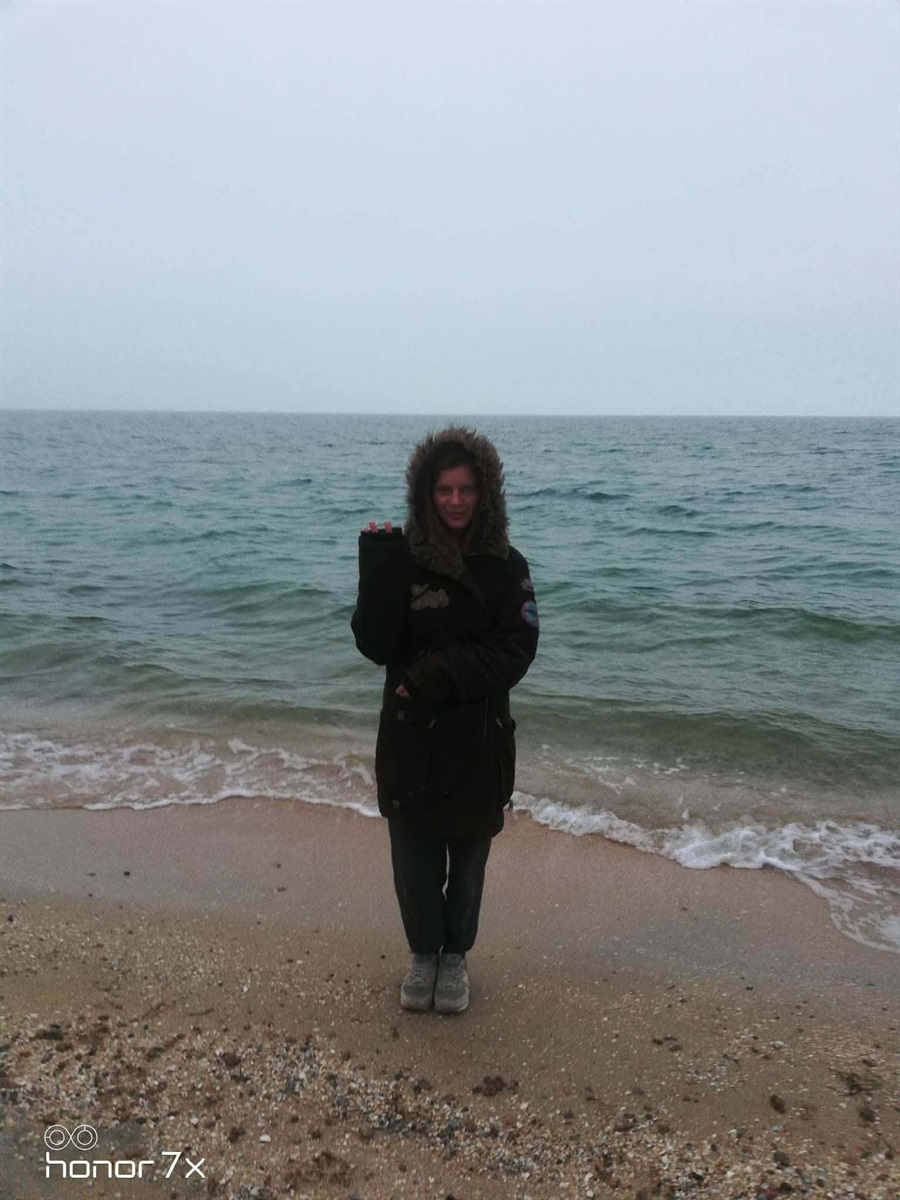 Ms. Svitlana in Berdiansk during the evacuation Фото: Archived photo
Reunion Against All Odds
By what she calls either God’s providence or fate, her husband Mykola was also in Berdiansk. When the invasion began, he had driven from Vinnytsia toward home. He could not enter Volnovakha — it was already burning — so he headed toward Mariupol, hoping to rescue his family. Mariupol soon fell under siege. He later left the city on foot, under shelling, and reached Berdiansk, where he decided to wait.
“I borrowed a phone and called my brother. He said, ‘Kolya is there. He’s waiting for you.’ I didn’t believe it. I called my husband. I said, ‘I’m at the station.’ He replied, ‘What do you mean you’re at the station?’ He thought I was still in Mykolaivka. Within minutes he was running toward me. We just stood there, unable to speak. It was a meeting you could hardly believe was real.”
More Than 40 Checkpoints to Freedom
The journey to Zaporizhzhia became the final test — more than 40 checkpoints.
“‘DNR’ militants nearly shot us for looking at them the wrong way. You drive with your eyes down. Don’t look around — they’ll kill you like a dog.”
When their convoy of eight cars passed the last occupation checkpoint and saw the first Ukrainian one, Svitlana could barely hold back her emotions.
“I wanted to scream, to run out and hug those soldiers. I was so happy we made it out alive.”
Reunion with the Children
At that time, the children were in Lviv with relatives. Her younger brother had whispered to their mother, “Sveta will be killed — she’s a patriot.” But she returned.
“You should have seen the children’s joy. It’s impossible to describe. They remember everything — how we left, how we hid during shelling. Every detail.”
The family now lives in the Kirovohrad region. It is their third home in displacement; twice they had to move because landlords sold the properties.
“It’s hard. You renovate, settle in — and then they tell you to leave. Sometimes you just lose heart. In Donbas, people wouldn’t treat others like that.”
They also face difficult attitudes.
“Some look down on us, displaced people. The aid has ended. We receive nothing — and don’t expect anything. My husband is a former serviceman, wounded and officially disabled, but he works. If one job doesn’t work out, he finds another. We don’t sit and wait for handouts.”
In 2022, their fifth child was born.
Life in Occupied Mykolaivka
Svitlana occasionally speaks to acquaintances who remained in Mykolaivka. They describe lawlessness.
“People work for pennies and have no voice. They’re afraid to even talk on the phone outside — someone can approach, take the phone, check it. If they don’t like something, they take you straight to Dokuchaievsk. The peaceful life we had in Ukraine is gone. You can’t even complain about the military. If they misbehave toward local girls — and that happens — there’s no response. Complaints are ignored. And every time I think: thank God I left. I have two teenage daughters. I’d rather live in a dugout than go back and live in constant fear for my children.”